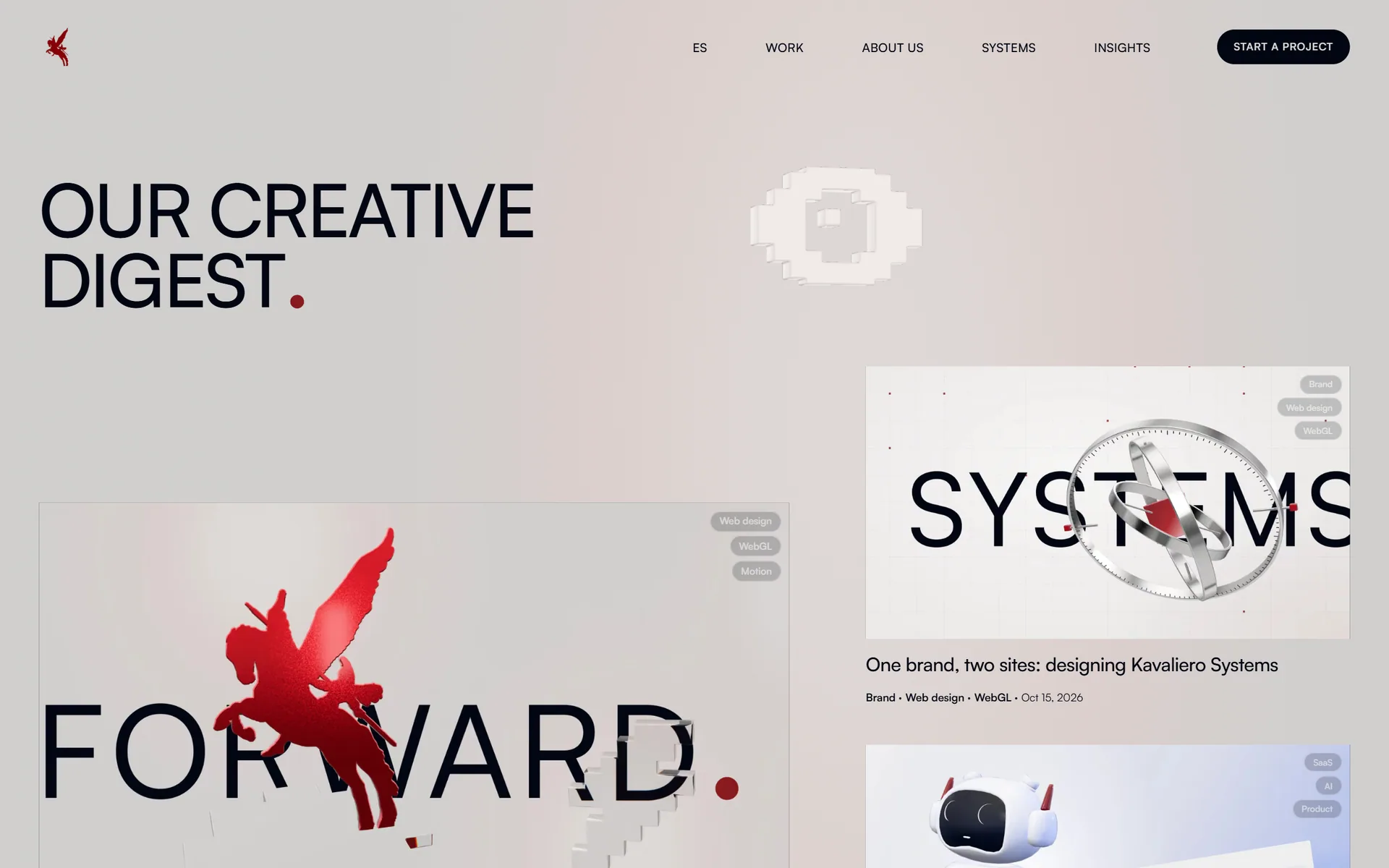
The studio site: two languages, eight WebGL surfaces on one budget, eight case studies and 29 articles in each language.
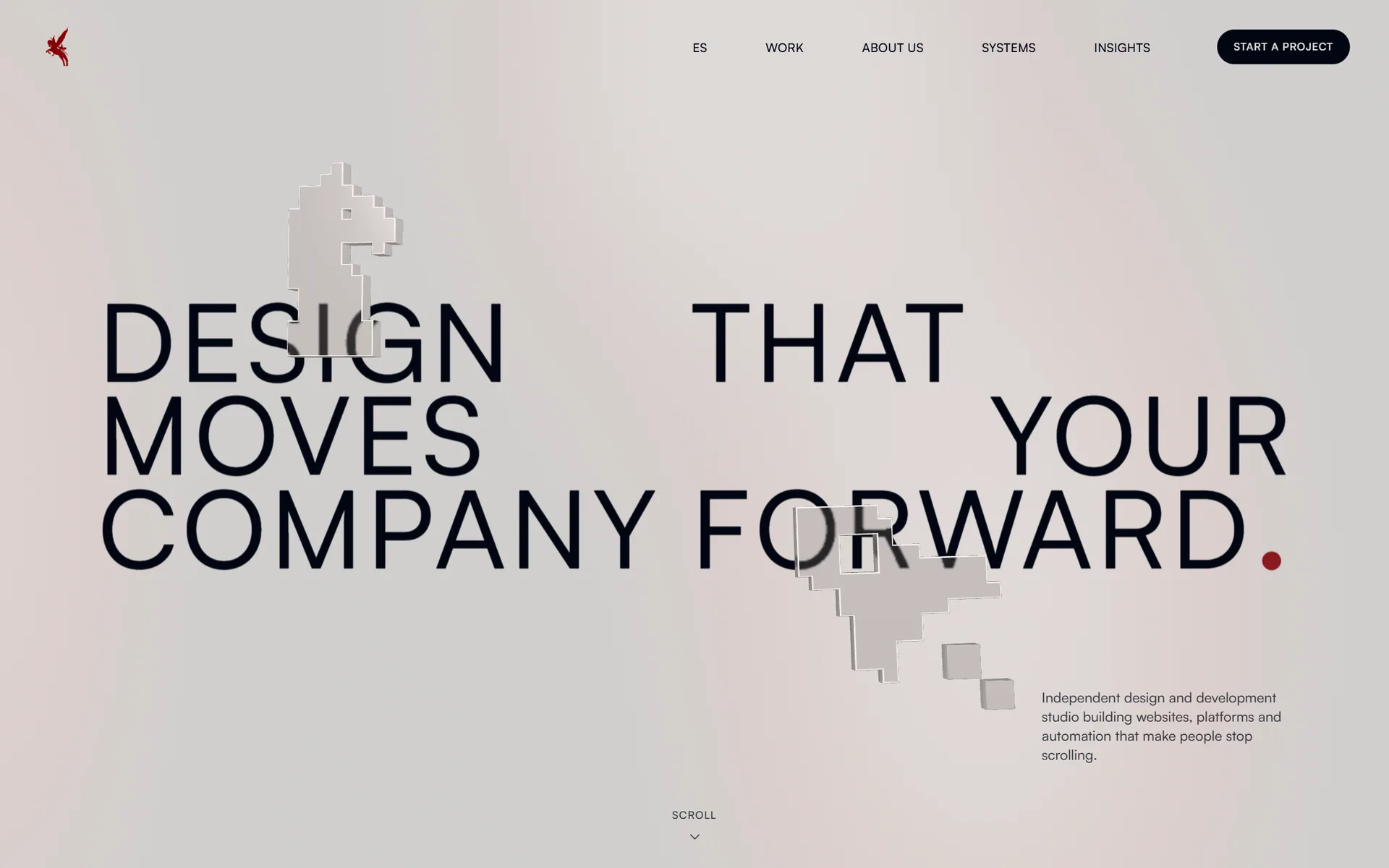
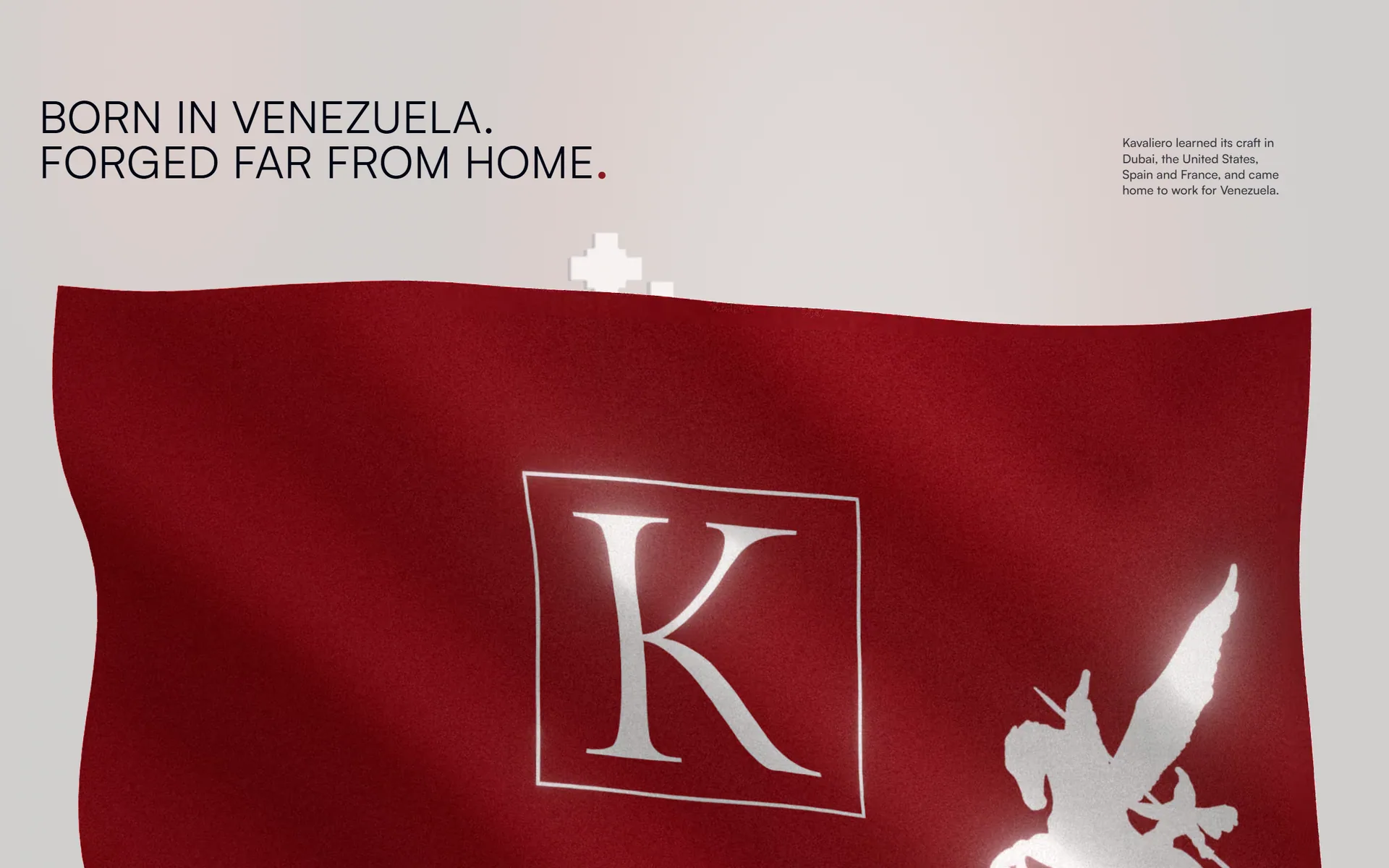
Kavaliero is the studio I have led as CEO since 2026. It sells three things in a fixed order: websites, SaaS platforms and AI automation, first to companies in Venezuela, then Latin America, then everywhere else.
I designed and built the site in Spanish and English. It is the studio's first case study, so every effect on it is one we are prepared to build for a client.
- 88localized URLs
- 8WebGL surfaces, all code-split
- 29articles in each language
- 160 msblocking on arrival, down from 1.7 s

Motion
One belt, four screens
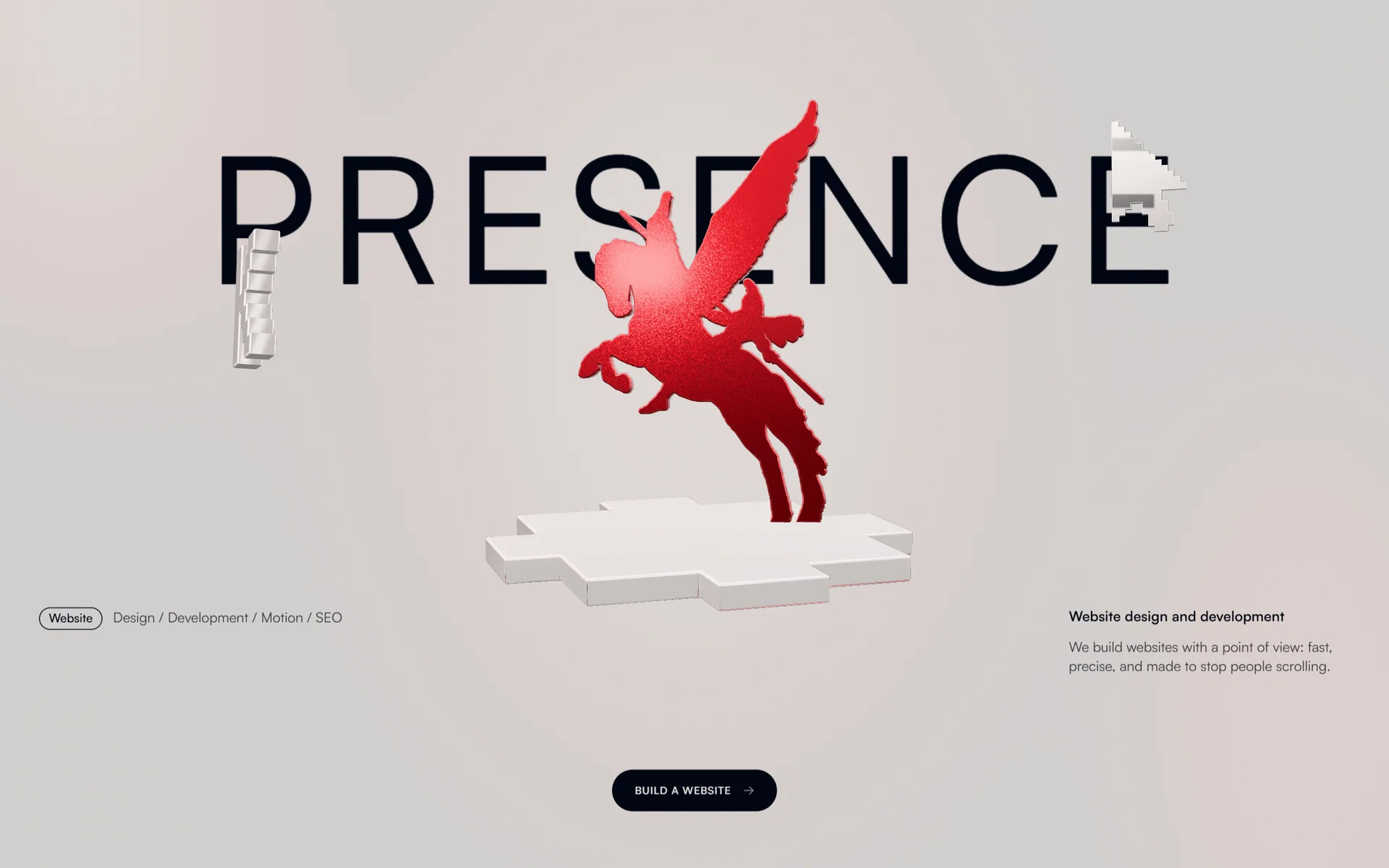
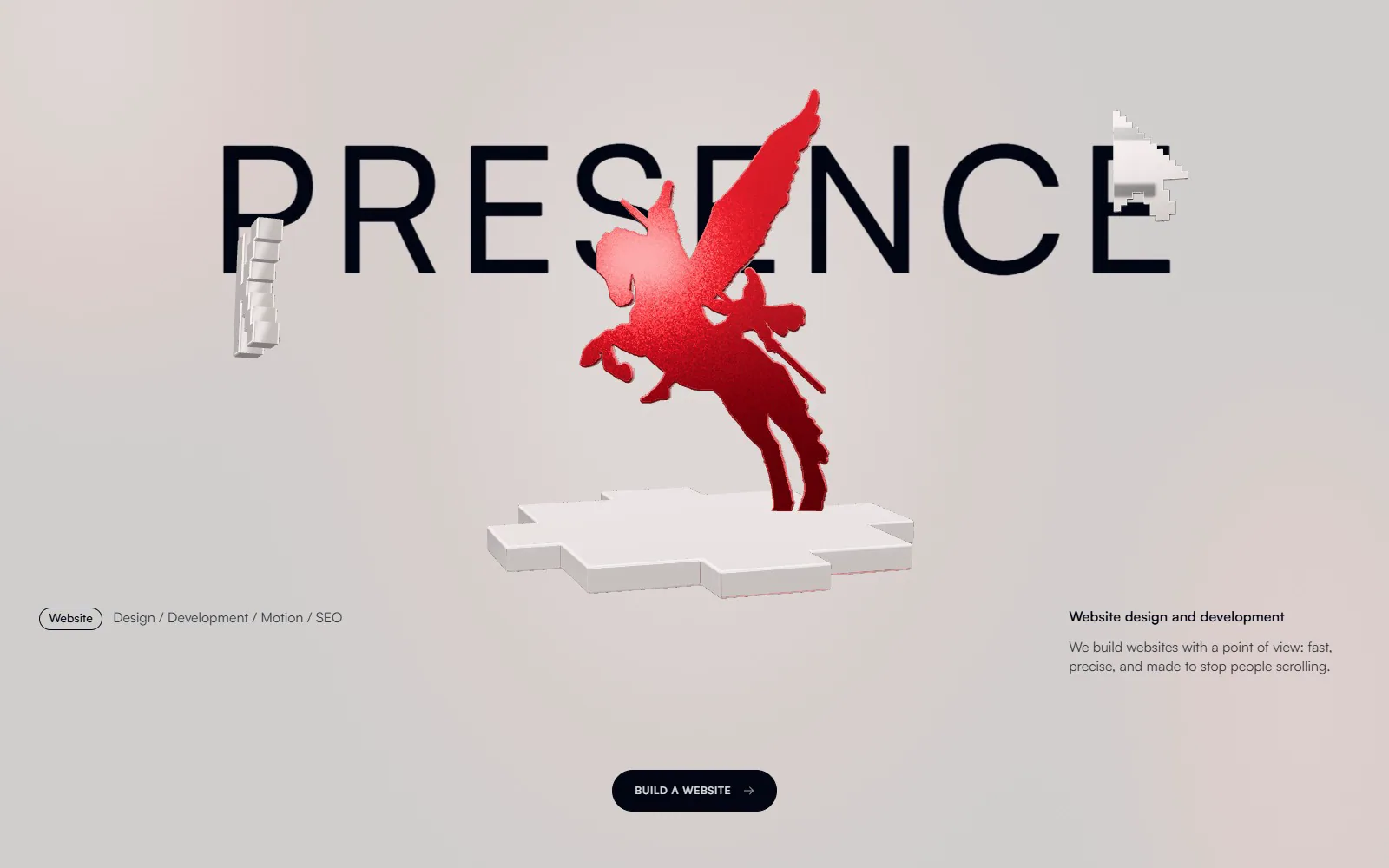
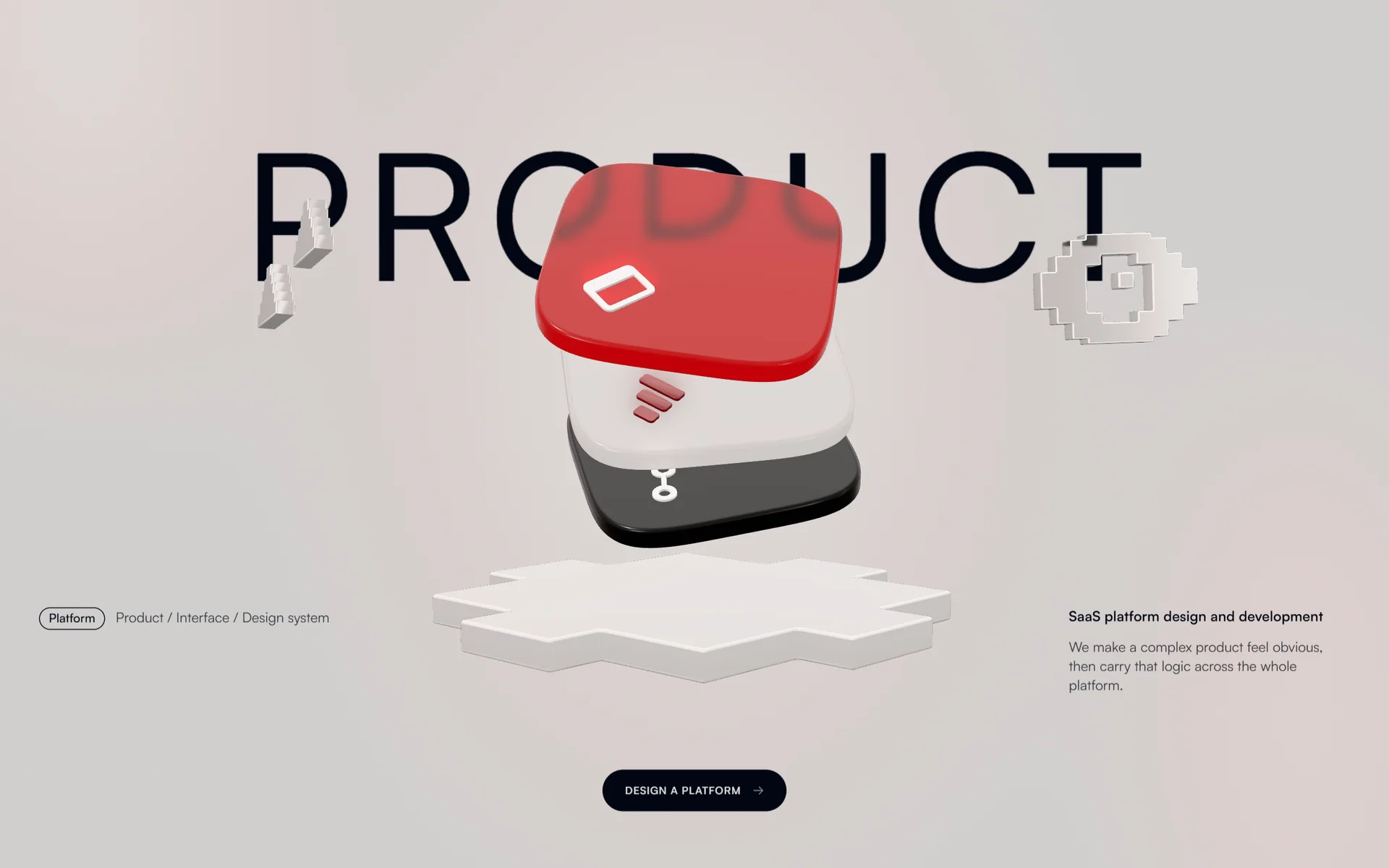
The hero and the three service screens ride one belt driven by a single position function. Each screen lands, rests and hands over to the next, so the opening reads as one object instead of four sections.
A pixel curtain between pages
Internal links are intercepted. The page covers in 0.42 s, reveals in 0.54 s, and arrival animations wait until the curtain has cleared.
A preloader that preloads
The intro builds the knight out of cells sampled from its own SVG while the landing's one 3D model loads behind it, with a CSS-only failsafe if scripting stalls.
WebGL
Blocks cut, not modelled
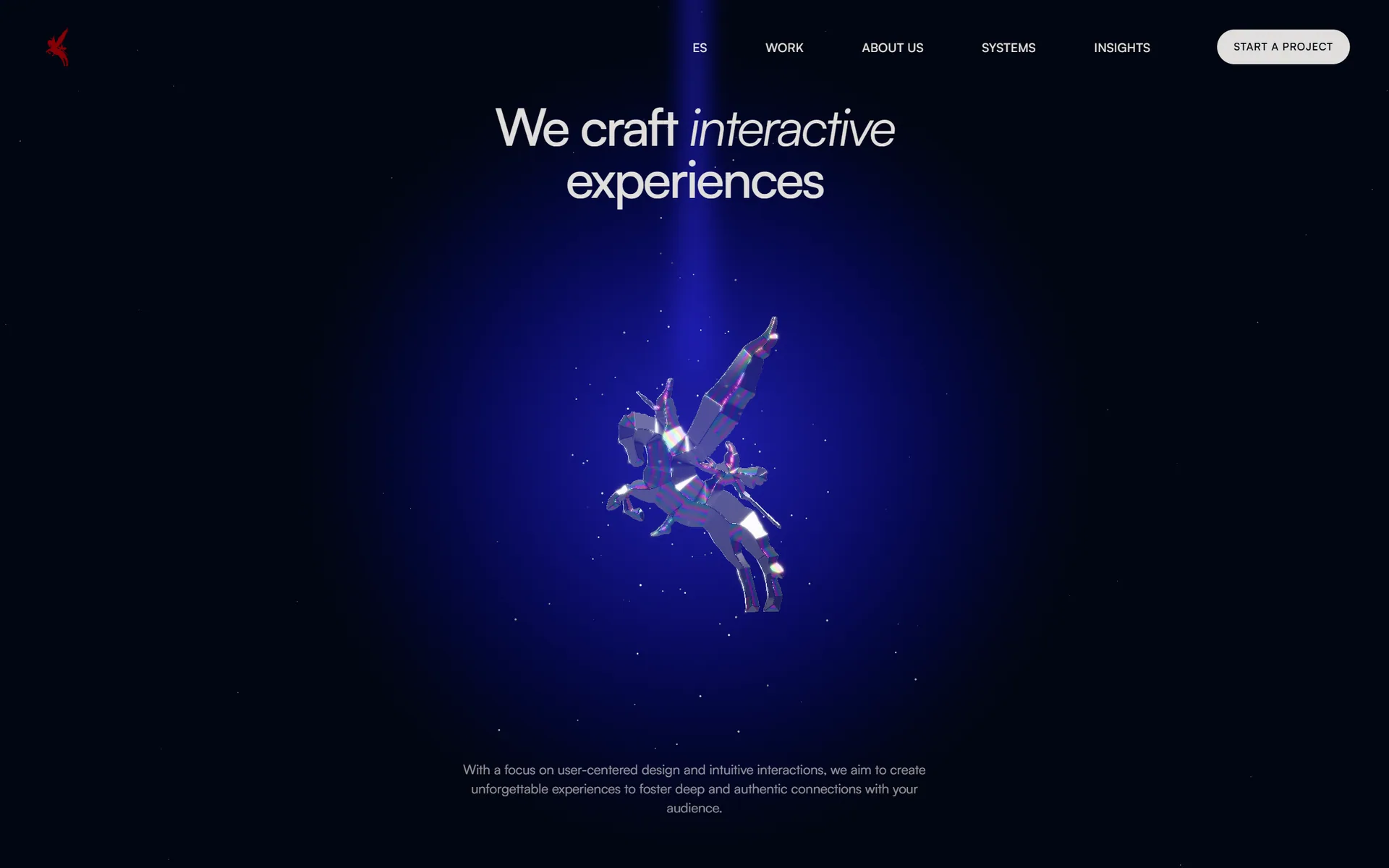
The glass blocks on the Work page have no model files. Each one is cut from a dozen or so planes when the page loads and then smoothed, and the smoke the pointer leaves behind the glass is a fluid simulation in the same WebGL context.
Built in code, lit by the page
The knight, the stacked cards, the slabs and the pixel figures on the landing have no model files either. They are built in code and lit by the page's own light field, read from its colour tokens, so they stand in the page's light, not a photo studio's.
One budget for eight surfaces
Every surface is code-split, paused off screen and in hidden tabs, capped on pixel ratio and given a reduced-motion fallback.

Under the surface
Routing that reads the reader
Spanish is unprefixed and English lives at /en. Slugs are written natively in each language and paired for hreflang.
Content as typed data
Its 29 articles in each language are TypeScript modules. An answer block feeds FAQ structured data, a stat block is not valid without a source, and every cover is rendered in code.
Closed by default
Strict content security policy, HSTS preload, and a contact form that validates on the server, traps bots with a honeypot and fails closed without a mail key.