An operating system for a container port: vessels, yard, gates and machines on one screen, fed live from the terminal.
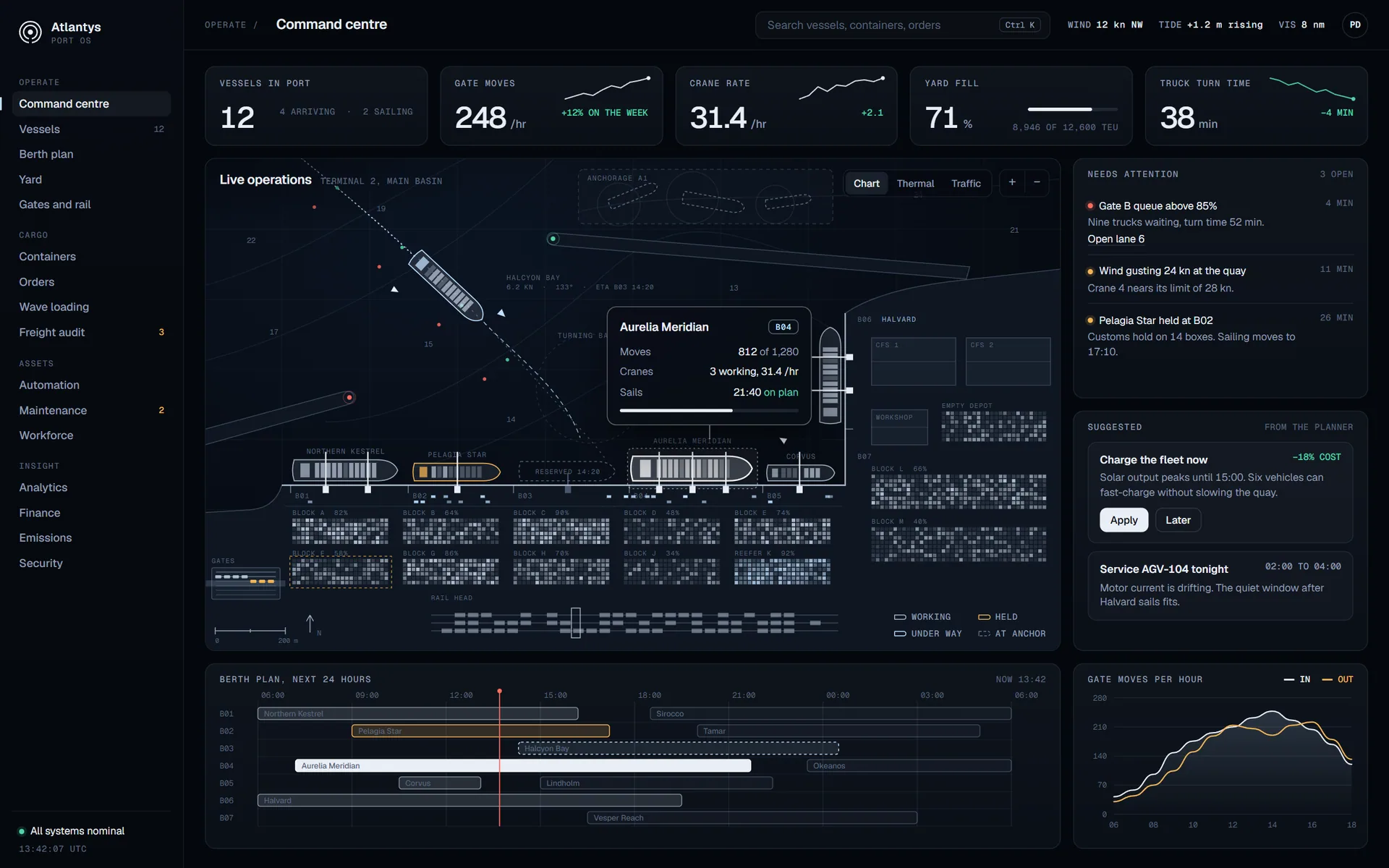
Atlantys is an operating system for a container port. It puts the vessels, the quay, the yard, the gates and the machines that move between them in one place, so whoever runs the shift can see what is held up and why.
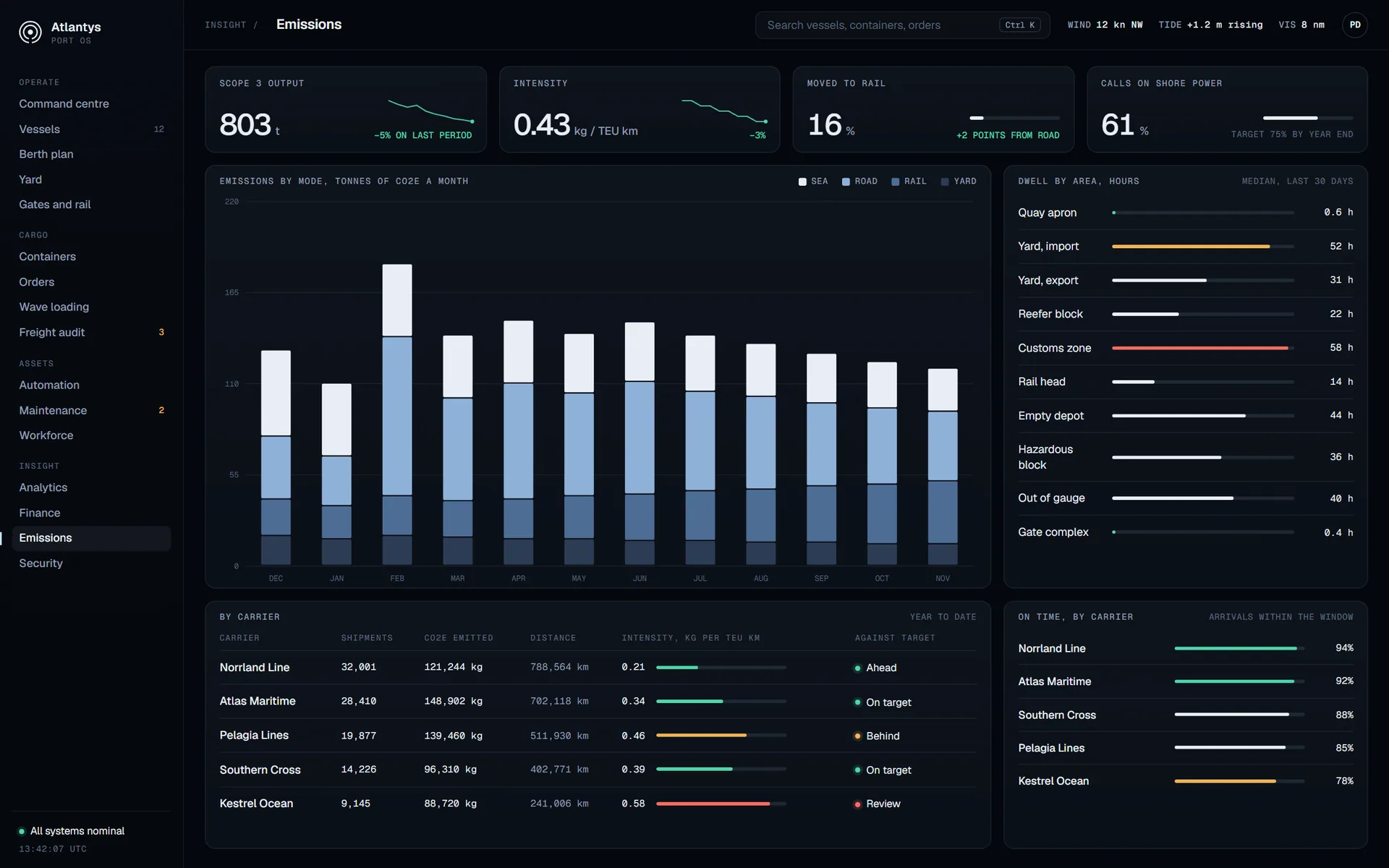
Authect built it for a company I cannot name, and the platform is theirs. I led the build and designed and coded most of it myself: the infrastructure, the agents that plan and recommend, and the models, which I trained, for the vessels and the rest of the port. On the screen that is sixteen modules. Beneath them, a back end takes in vessel positions, gate reads and machine telemetry and turns them into one picture of the terminal.
- 16modules, one for each part of the port
- 4machine systems on one switchboard
- 3live feeds behind one chart
- 3interface languages
What it covers
The water
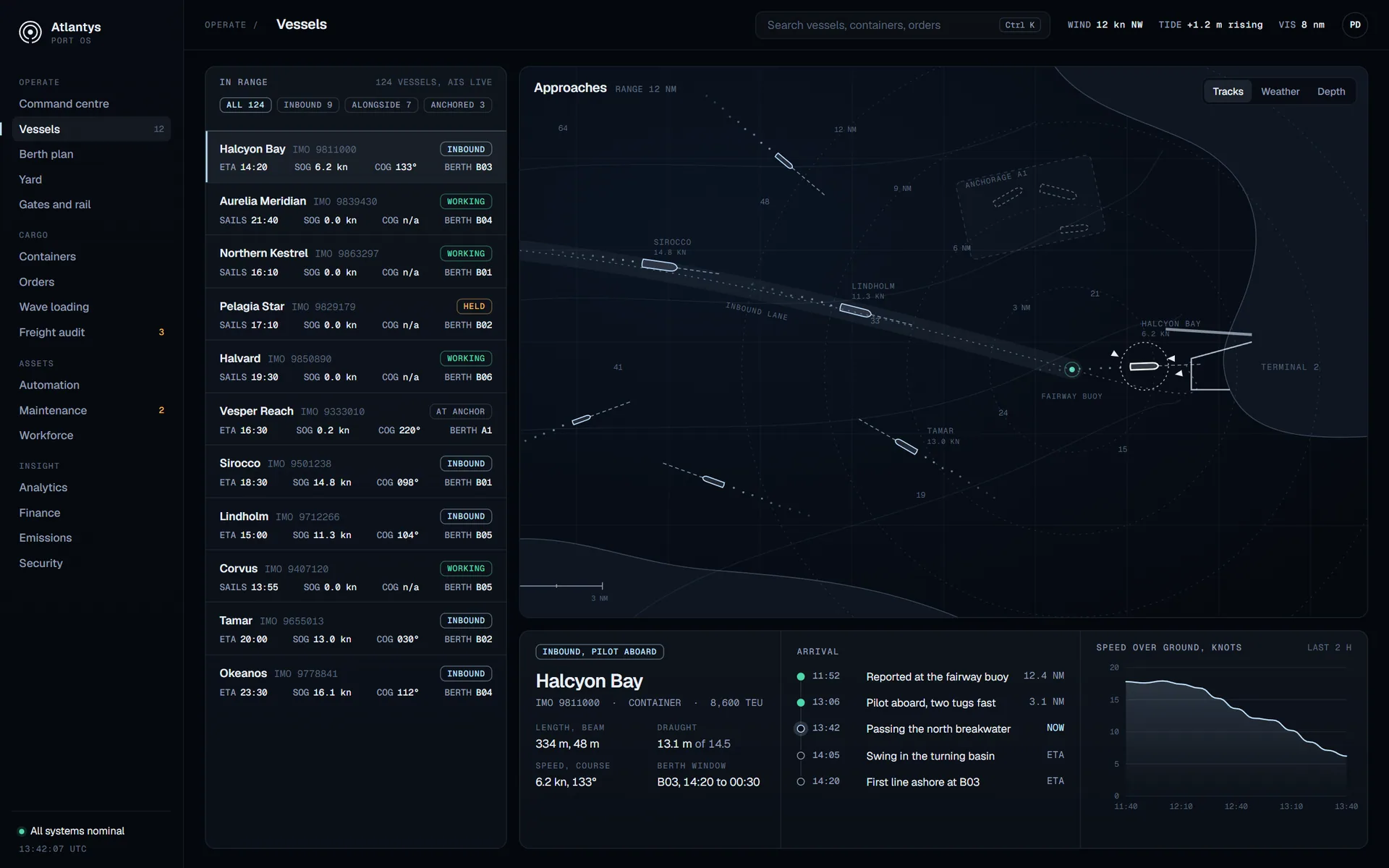
Every vessel in range on a live chart, with speed, heading and time of arrival, and the berth plan for the next day beside it.
The yard
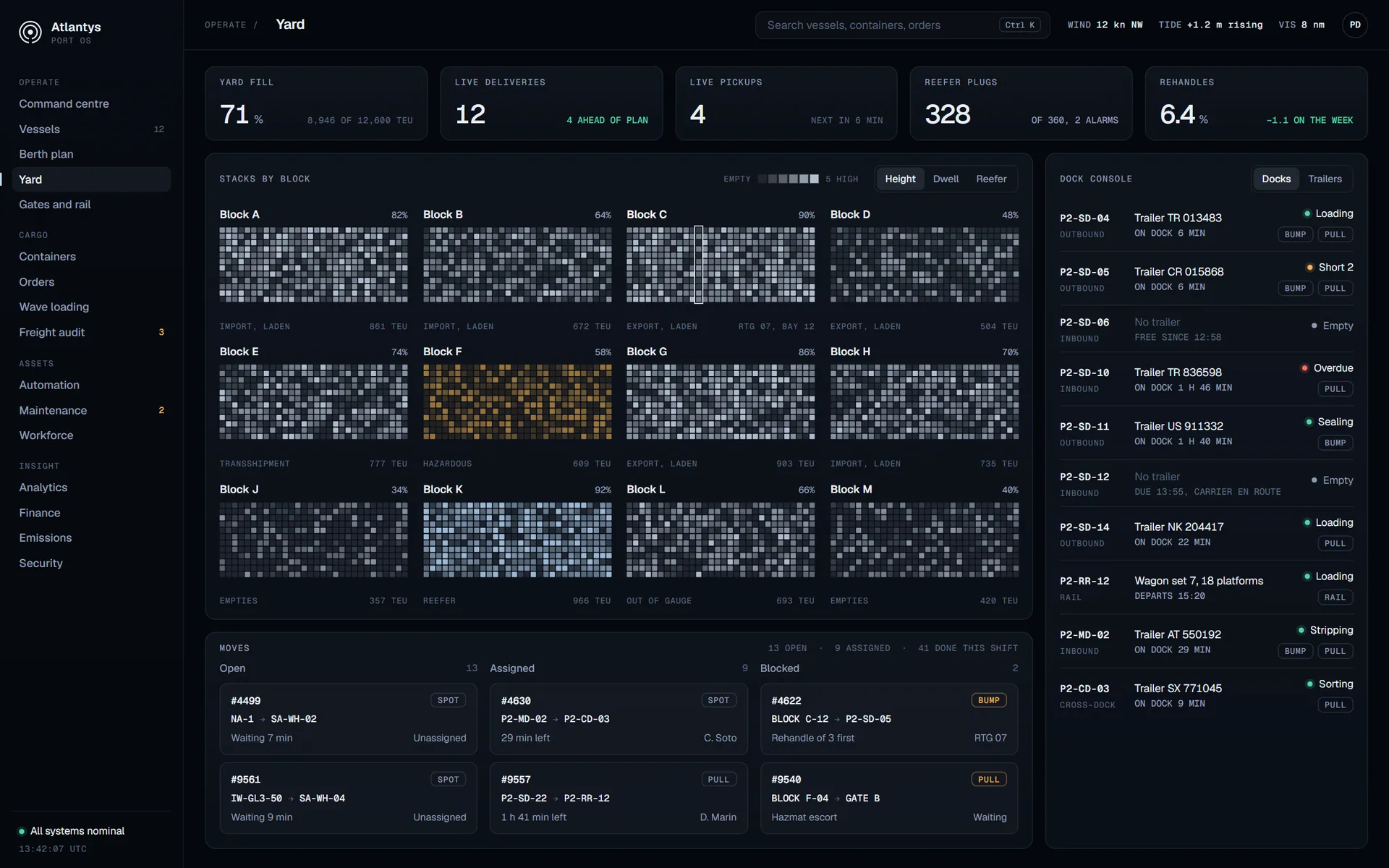
Stack heights block by block, a dock console, and a board of every move between dock, stack and gate.
The cargo
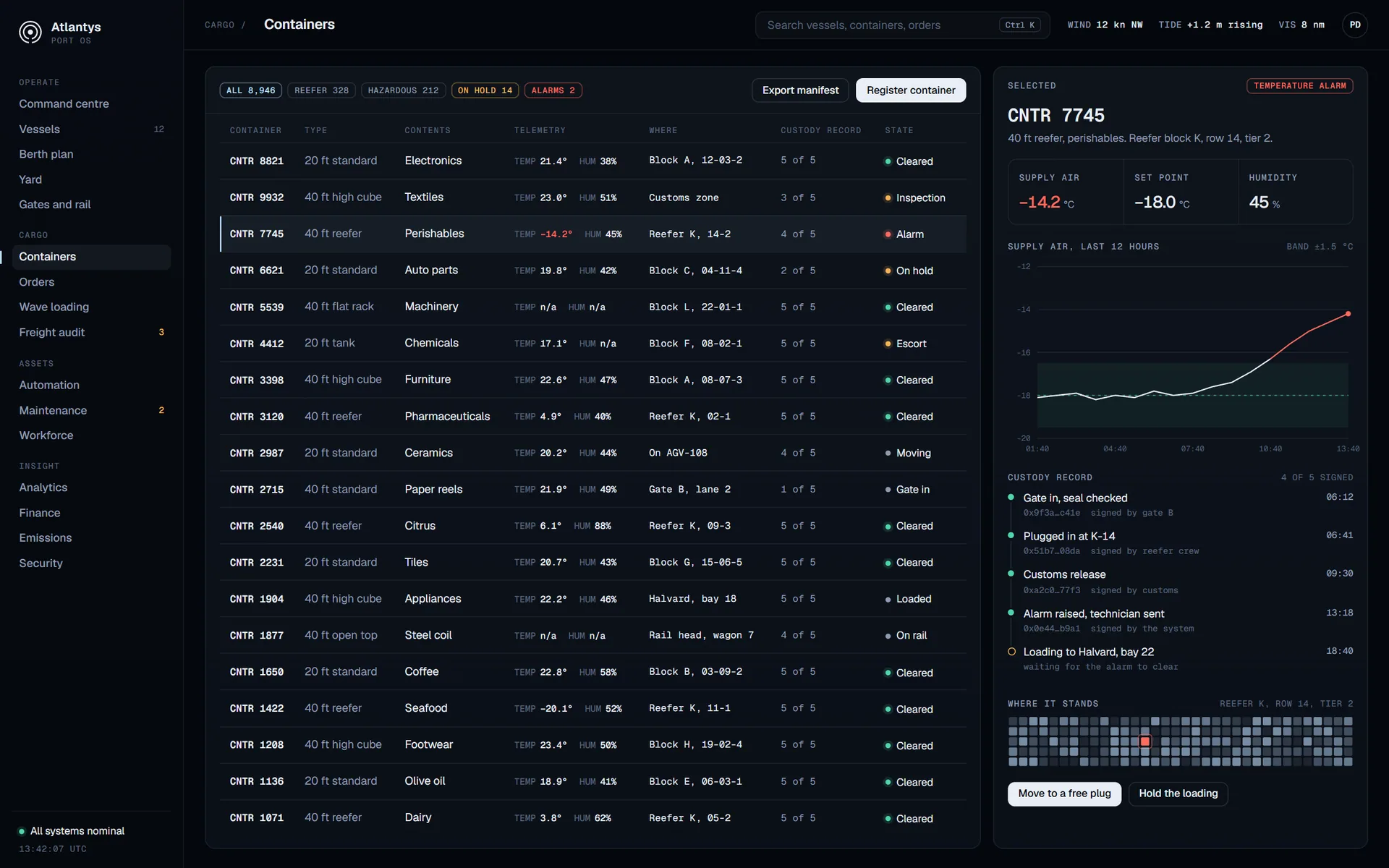
Orders, wave loading, freight audit and a container list that carries temperature, humidity and a custody status on every row.
Machines
Four systems, four switches
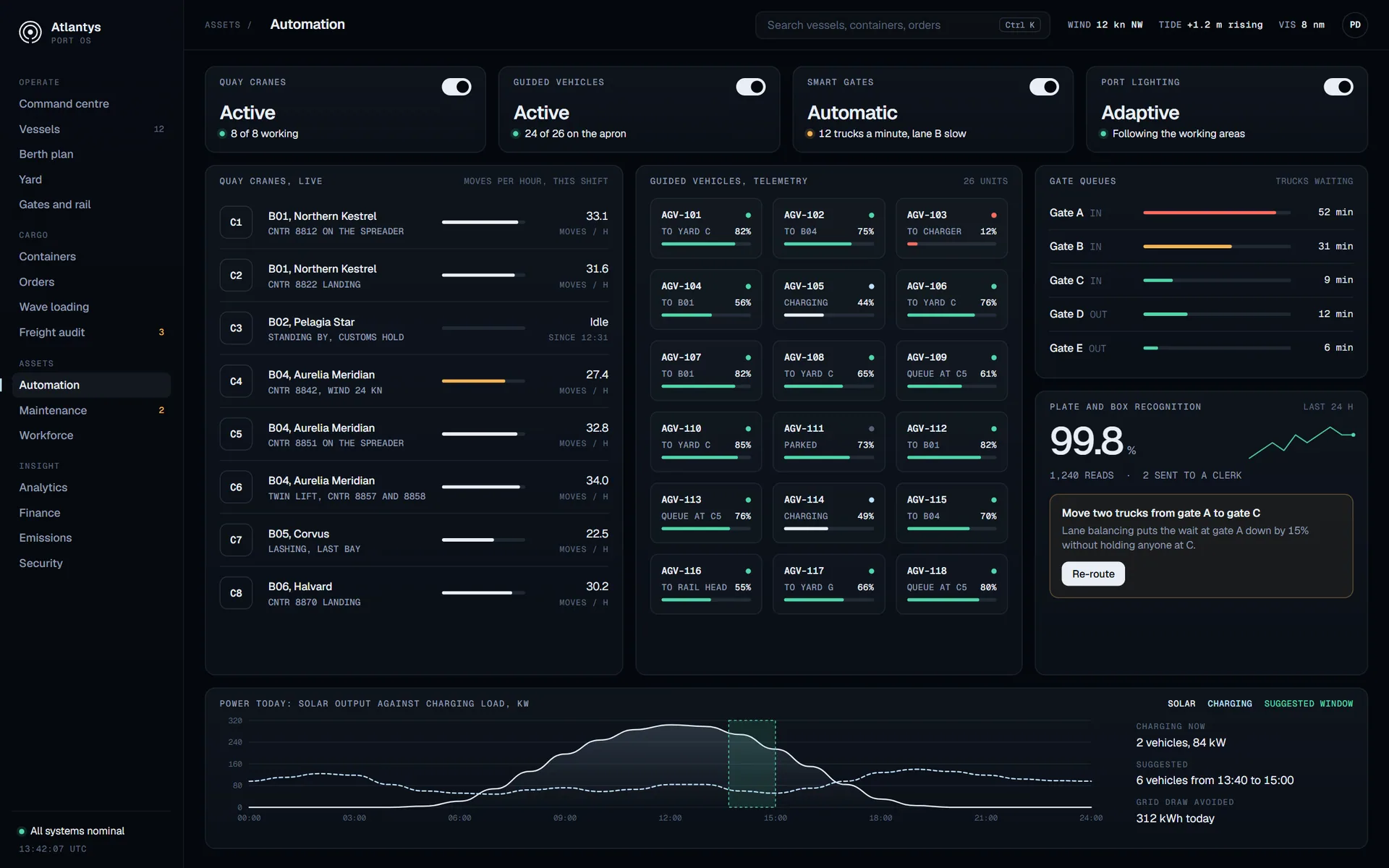
Quay cranes, guided vehicles, smart gates and port lighting each have a mode and a live count on one screen.
Gates that read
Queue length for every gate, the accuracy of plate and box recognition, and a suggestion to balance the lanes when one backs up.
Alerts with a next step
On the command screen each alert comes with the action recommended for it, and the planner's suggestions sit beside them.
Back end
One stream in
Vessel positions, gate reads and telemetry from cranes, vehicles and reefers arrive as events on a single stream. Each one is checked, stamped and matched to its vessel, container or machine before any screen sees it.
Live state, kept apart from history
The current picture of the terminal is held ready for the screens that redraw every second. Every event is also written, in order, to the store the charts, the audit and the planner read from.
A planner that proposes
Berth windows, yard moves and lane balancing come out as suggestions with the reason attached. Nothing is applied until someone on shift accepts it.
A custody record that cannot be rewritten
Each hand-over of a container is signed by whoever made it and chained to the step before, so a changed record shows.
Around it
Access by role and by terminal
An account sees the modules and terminals its role allows. Every action that changes something is recorded with who did it and when.
It talks to what the port already runs
Orders, invoices and finance figures are exchanged with the operator's own systems, so nobody types them twice.
One shell, sixteen modules
Every screen shares one layout, one set of components and one chart theme, so a new module is a page and its data.